ABOUT
I’m Melody.
I train men and women who are serious about the long game. Not the next 12 weeks. Not the next season. The next decade — and the one after that.
I work privately, by referral, at Menlo Circus Club, Sharon Heights Golf & Country Club, and in home gyms across the Peninsula. My client roster is selective by design.
WHAT I BELIEVE
Most people avoid lifting heavy because they're afraid of getting hurt. What they don't realize is that avoiding it is the injury — just a slower one.
I believe the body keeps score — and undertrained (sometimes overtrained) bodies pay compound interest.
Bone density drops. Metabolism slows. Muscle mass erodes. Mobility narrows. For women, shifting hormones accelerate all of it. For men, declining testosterone does the same — steadily, and usually in silence.
None of this is written in stone, but it accelerates when you ignore it — fastest when you're trying to show up fully in your game, your relationships, your life.
The people I train have already decided they're playing the long game — not chasing an aesthetic, but protecting a capability for the next decade, and the one after that.
Lifting heavy isn't the risk. It's the antidote — but only when it's taught correctly. That doesn't mean grabbing the heaviest kettlebell or dumbbell on day one. It means doing the unglamorous work first: addressing mobility restrictions, correcting imbalances, building the foundation that makes everything else possible. The process is the point. Learn to trust it, stay consistent, and the results will follow — not as a goal you chase, but as a product of doing the right things, over and over again.
THE METHOD
I practice what I tell my clients. Every single day.
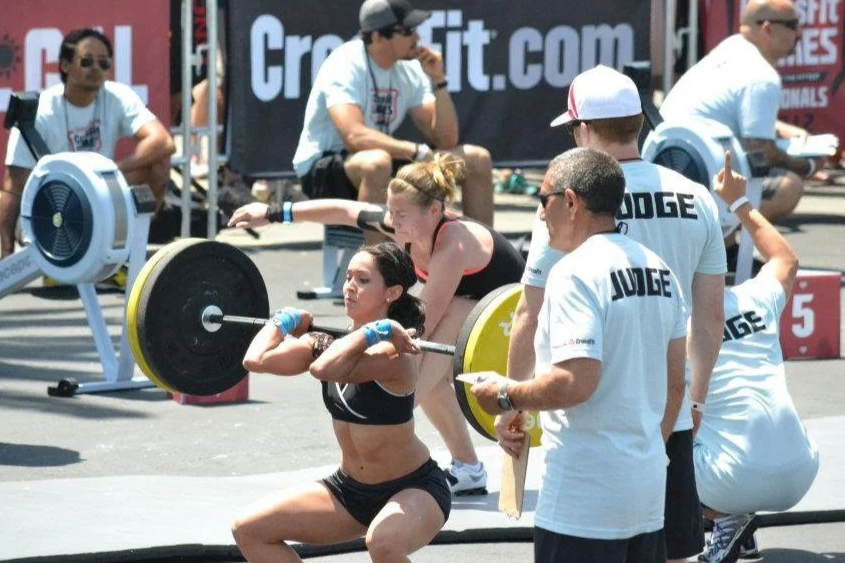
I came to CrossFit first as a competitive athlete. By 2011, I was coaching it. I wasn't the biggest or the strongest in the room. I was the one who learned early that precision and intention matter more than power. Every rep had to be technically right. Every movement had to be earned. CrossFit shaped how I think about training, but over the years my approach has evolved to meet each client exactly where they are. Depending on what someone needs, that means drawing from CrossFit, functional bodybuilding, or Pilates — sometimes all three. The methodology follows the person, not the other way around.
The people I train arrive with different stories and yet with the same underlying need — a body that works with them, not against them. Some are rebuilding after time away. Some never stopped — they played through college, stayed active into their careers, and are only now realizing that what worked for their body a decade ago no longer does. Some are well into retirement, still sharp and still competitive, and they're not here to slow down — they're here because they want to keep doing what they love for another 20 years. For women, the work often centers on navigating the hormonal shifts that quietly change how they recover, how they feel, and how they respond to training they've done for years. For men, it's often mobility and core function — the things that determine whether you're still playing at 80, still moving well, still in the game. All of them want to get stronger. Most want to feel like themselves again. What they share is that they've outgrown generic programming — and they know it.
This is where the long game gets built.
Every client relationship begins with an InBody 570 assessment — clinical body composition data that tells us exactly where we're starting and what we're working toward. From there, I integrate WHOOP wearable technology and continuous glucose monitoring to build a complete picture of what's happening inside your body between sessions. All of this lives inside CoachRx — the platform I use to design, deliver, and track every client's programming. Your workouts, your progress data, your lifestyle metrics, and our communication are all in one place. When training load, recovery data, and body composition are all visible at once, nothing is left to guesswork. We repeat the InBody every four weeks.
I rely on data, not feelings.
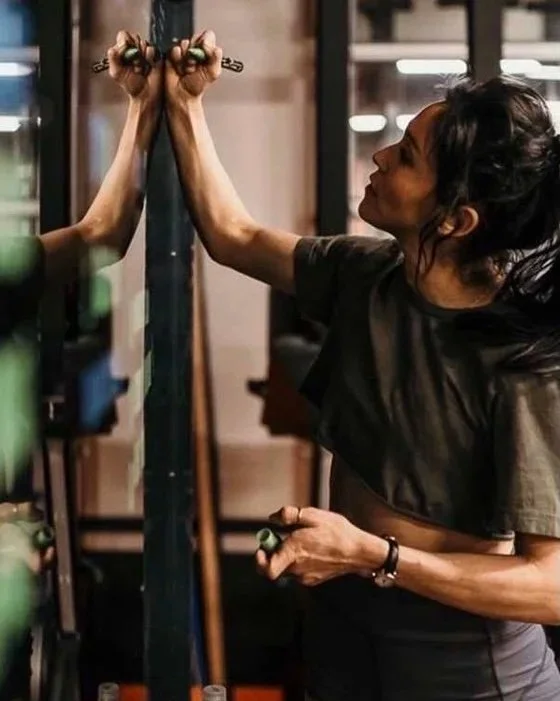
Melody Sanchez
PERSONAL TRAINER
Melody Sanchez has been coaching since 2011. What's evolved over that time isn't the standard — it's the sophistication. Her approach is grounded in data, driven by precision, and built around one belief — that small, consistent improvements compound into something permanent. Her clients train 2-3x per week, every week — a recurring schedule at the club, or a monthly subscription at their private residence. She works with 5-7 clients at a time.
Availability is currently open.
MY STORY
“You do not rise to the level of your goals, you fall to the level of your systems.”
- James Clear
My coaching philosophy is rooted in “the aggregation of marginal gains” — an idea by James Clear. I came to it before most people had heard of him from his book Atomic Habits. Back then, he was publishing articles twice a week about productivity, behavior change, and the power of building systems over chasing outcomes. That work changed how I think about everything. I realized that the long game isn't about setting a goal and grinding toward it. It's about building the daily processes — the identity, the habits, the small consistent improvements — that make the result inevitable. Instead of focusing on an outcome-based goal, I have my clients focus on a process-based goal. That's where transformation lives.
What those processes look like depends entirely on who's in front of me. For most of my career, that was men. I know how to teach fitness at an elite level, and I also know how to teach more complex modalities including gymnastics, cardio, and Olympic weightlifting and powerlifting — the mechanics, the cues, and the progressions. Men are a relatively straightforward variable. Their hormones are stable. Their recovery is predictable. Their bodies respond to load in ways the research has studied for decades. But what I've learned training men in their 50s, 60s, and 70s is that their marginal gains live in the details most programs ignore — the mobility restrictions that quietly accumulate, the core deficiencies that affect everything from posture to performance, the sleep quality that determines whether last week's training actually stuck. Address those 1% inefficiencies consistently, and the compounding effect shows up on the golf course, in the gym, and in how they move through the rest of their life.
Women are a different problem. A more complex one. And complexity, as it turns out, is where I do my best work. Women are not small versions of men — and understanding that changed everything about how I coach. For women, the marginal gains aren't just physical — they're hormonal, metabolic, and neurological. A 1% improvement in sleep quality affects cortisol. A 1% improvement in recovery awareness changes how the body responds to load. Stack enough of those small corrections over time, and the compounding effect is nothing short of transformational.
I know this because my own body changed — and I didn't have an answer for it. My recovery, my energy, my response to training I had done for years. I went looking for answers and found the researchers actually studying women's hormonal, metabolic, and neurological health across their lifespan. That's when I learned how to harness the technology and build programs around what each body actually needs. The InBody shows what's happening to my clients' body composition. The WHOOP shows what's happening between sessions. The continuous glucose monitor gives me insight into systemic inflammation — not just how the body regulates blood sugar, but how that regulation affects energy, joint health, and recovery in ways most training programs never account for.
I rely on data, not feelings.
That's what I bring to every client. Not just how to lift or exercise but how to listen to the right signals — their cycle, their sleep, their body composition, and their cognition.
Who I Train
-
![]()
The One Who Hasn't Slowed Down
They've always been the ones who showed up. In college, in their careers, and now. The sport may have changed. The decade has certainly changed. But the commitment hasn't — and neither has the standard they hold themselves to. They're here to stay capable, stay sharp, and stay in the game.
-
![]()
The One Who's Rebuilding
Life interrupted. A surgery, an injury, a season that demanded something else entirely. The fitness didn't disappear — it just went quiet. Now they're ready to rebuild, and they're doing it with more information than they had before. They know their body has changed. They want to work with someone who knows that too.
-
![]()
The One Who Wants Answers, Not Assumptions
Something has changed — not suddenly, but undeniably. Recovery takes longer. The body sits differently. The program that produced results for years is no longer producing them. They're not willing to chalk it up to aging and move on. They want to understand what's actually happening inside their body and train accordingly.
-
![]()
The One Who's Already Doing Everything Right
Active. Disciplined. Consistent. They've been doing the work for years — on the course, on the court, in the gym. What they haven't had yet is someone who knows how to take all of that and push it further. They're in their sixties, and they're not interested in a maintenance plan. They're interested in finding out what's actually possible.